Women’s Character Towards Investing.

One of the striking things about investing is that it’s integrally gender-neutral!

Both genders (female and male) should know that once you buy a stock, bond, mutual fund or any other asset, the truth that it climbs or falls in value has nothing to do with whether you’re a man or a woman!

In that sense, investing exhibits a pretty fair playing field compared with the rest of society.

In my view, women (and men for that matter) would be better served by an approach to investing that emphasizes life stages and not gender.

Today, women’s financial needs aren’t immensely unique, nor is the knowhow they need to look after them. So for the sake of all women who understand a thing or two about investing, let’s stop pretending there is a really special need.

Women are well-suited as investors, since they shop well, understand value and infrequently attempt anything without first getting directions and understanding the ramifications.

On the other hand, do women really have special investing needs?

Now the answer to that question is simply …

Yes!

Many if not all women spend their prime earning years working in the home, making them the losers under the current retirement and Social Security systems of any country on the globe.

But he said to me, “My grace is sufficient for you, for my power is made perfect in weakness.” Therefore I will boast all the more gladly of my weaknesses, so that the power of Christ may rest upon me.

2 Corinthians 12:9 (ESV)

They face numerous challenges men never even have to think about.

Women live longer, their careers are unremarkably interrupted by family needs, and many of them tend to be less knowledgeable and more conservative about investing.

Or even worse, some women who don’t apprehend investing could be prime targets for unethical sales-people.

Let’s look at their biological clock.

It’s a fact with valid indepth research:

Women live five to ten years longer than men!

The average age for a woman to be widowed is 55 today. In fact, most widows now living in poverty were not poor before their husbands died.

Given this biological fact a woman needs a much bigger “nest egg,” yet there are many things that get in her way. Think of their lives:

  • They move in and out of the workforce to raise a family.
  • They discover that they need to move for their husband’s career, placing their own careers in jeopardy.

What do these obstructions do to a woman’s financial future? Well the average woman will spend many years away from the workforce, while a man spends a lot less years away. This all adds up to retirement gains/ benefits that will equal only to a part of her male counterparts.

Even though they need bigger “nest eggs,” many women tend to be more conservative investors.

In fact the majority of the elderly poor are women!

Because of all of the above, women ought to be investing differently. They must revaluate their personal goals, understand their risk tolerance levels, and assess their time horizon for when they will need the money.

Once that’s done, it’s time to attain all that they can to make wise investment decisions, and start investing as people who are afraid to take risks, or as people who plan to leave the workforce for a few years, or as people who deliberated that their spouses would be there to help support them in their old age but aren’t.

What then can they do to improve their chances of living a financially healthy life?

  1. Women ought to start saving as soon as possible and often for their retirement.
  2. They should not be afraid of making investment mistakes (it’s normal)… They must learn from them!
  3. They have to take some sort of risk in their portfolio, but continue to do that carefully with good research to back up their choices.
  4. Finally, they must upthrust and take full charge of their own financial future because out of 100% of men, 22% of them do it for their women (wives) if I may say before they pass on!


Economic Indicators and the Market.

As an investor it is important to interpret how economic indicators can both positively and negatively impact financial markets, investing and ultimately the value of your investments. The key to your success will be looking at these economic indicators, excerpting what you need to make the right investment decisions.

It’s important to note that economic Indicators are key statistics that show where the economy is headed by monitoring inflation.

The reason why inflation is of preeminent importance is based on the fact that it highly influences the level of interest rates.

Stability within the economy is retained as long as inflation is kept under control. Rising inflation reflects rising prices evoked by demand and exceeding supply.

Therefore, the increase in prices of goods and services would erode the purchasing power of the money you make, on the assumption that the money you earn does not increase in line with inflation.

To put it simply, Governments like Uganda use economic indicators as tools to ensure stability within the economy.

Accordingly the individual indicators of inflation like the consumer price index, unemployment and gross domestic product(GDP) cannot be directly manipulated; so to slow down or speed up the rate of growth in prices (inflation), interest rates are used.

Interest rates influence the willingness and ability of individuals and businesses to borrow money and make investments. Changes in economic activity, when actuated by changes in interest rates, can fuel an expansion or cause a downturn in the economy.

For companies, higher interest rates often mean lower profits. If interest rates rise, companies have to pay more, to borrow the money they require to fund growth of their company.

Eventually, this construes into higher prices for their goods and, often, lower sales. Especially if customers are buying on credit and have to pay higher interest rates for them to borrow.

Potential customers may decree they cannot afford to buy products as the cost of credit is high.

The eventual decline in company sales and earnings is something investors prejudge as soon as rates go up.

The outcome is that stock prices go down before the effects of the increased interest rates are actually felt on the company’s bottom line.

Contrarily, when interest rates fall, company borrowing costs are lower, so their profits on the same level of sales will be higher.

For this reason, customers who buy on credit are more convenient buying if they are paying lower rates, so they buy more. This later on creates higher sales, which will lead to increased company profits.

Sooner or later higher profits will lead to an increase in stock prices.

More often than not, the above aspect creates an environment where investors are typically ready to pay higher prices as soon as the Central Bank intervenes to cut interest rates in the anticipation of the cycle of increased profits.

As an investor it is important to bear in mind that the price of your stock will change throughout its lifetime because the price you actually obtain will be ascertained by current market conditions (supply and demand) and more importantly interest rate fluctuations. Of which this will also determine the capital you will gain or lose at the end of time.

So at long last when you hear about economic indicators, always remember how they will affect the value of your stocks and whether you would need to re-evaluate your positions.

Why Investing is better than Saving in this Era.

In this era, every investor is driven by two potent motivations. On one side, we have the propention for gain, and on the other we have the fear of loss. The equilibrium between these two influences determines one’s investing personality and dictates the level of risk they are willing to take. Distinctive attitudes consider investing in stocks to be high-risk while keeping a savings account is considered to be a safer option. However, there are several reasons why investing is a better long-term option.

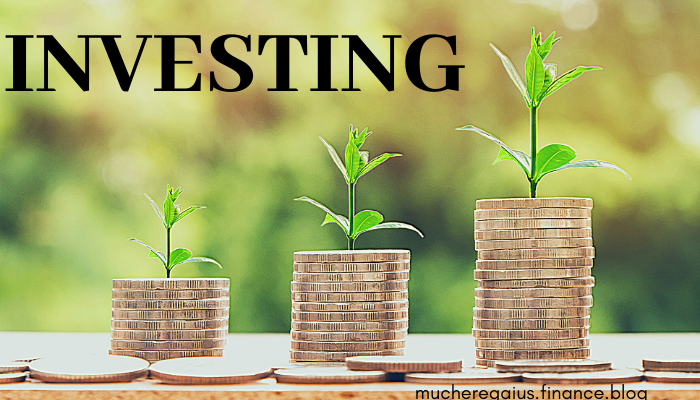
Investing

Returns on the majority of investments will go up and down over time. Stocks are volatile and can be horrifying in the short-term. But in the long term, they out-perform virtually every major asset type since 1926, stock market returns have averaged 10%, which is far higher than bonds and fixed-interest options.

Those conservative investment opportunities have low yields, but they still offer greater returns than a savings account.

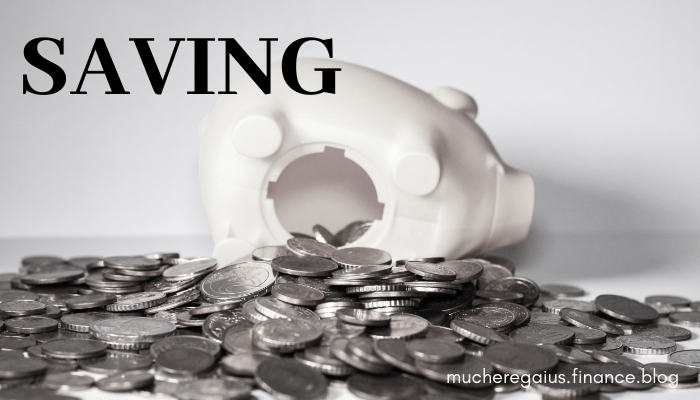
Saving

Savings accounts are generally protected (up to a point) by insurance. That makes them safe places to keep your capital, but with that safety comes extremely low yields; less than 1% in many cases. There are a variety of options you can take, and all guarantee safety for your money, but they offer little in the way of gains.

The Risks to be taken

Investing has intrinsic risk, and unexpected things can happen to deal you a devastating blow without warning. Even powerful companies and experienced investors can lose out if they fail to stay ahead of the curve. Of course, there are also risks in utilising savings accounts. Interest rates govern the yields on savings accounts, and when rates get low and inflation gets high, the loss of value in your money is equal to losing it in a harsh downturn in the stock market. That element of risk still exists, but with far less potential for gain than what investing offers.

“How many millionaires do you know who have become wealthy by investing in savings accounts? I rest my case.” – Robert G. Allen

When you have time to play the markets; when you aren’t close to retirement, investing is the only way you are going to make significant gains from your capital. And the difference between what you can gain from saving and what you can gain from investing is huge, so on balance investing is a far better option in the long-term than saving.

Effects of Inflation on the Bond market in the 21st Century

Bonds are fundamentally different from stocks, and investors count on the different ways that they react to changing conditions in the Ugandan economic environment in the 21st Century. The primary value of bonds is that they offer a predictable stream of future cash flow to both young investors and experienced investors, and the companies that issue bonds offer incentives in the form of interest payments in exchange for investors’ consignment to lend them money. Yet the one thing that most bonds fail to take into consideration is how price changes can affect the purchasing power of the future cash flows that bondholders receive from the borrower. Below, we’ll look more closely at how inflation affects the bond market in different country economies with emphasis on Uganda.

The direct impact:- Rising interest rates

The typical bond offers a fixed stream of payments, consisting of interest only during the lifetime of the loan and repayment of principal at maturity. The challenge in valuing a bond is that although you know what a dollar is worth currently, you don’t know exactly how valuable it might be in the future.

The bond market builds expectations on inflation into their pricing models, and in general, bonds are priced to offer at least some real return on top of the projected inflation rate estimated. For this reason, when inflation levels rise in a sustained manner, bond investors will demand a higher interest rate from the bonds they purchase in order to maintain a margin that will allow them to see their assets rise in purchasing power over time.

 Inflation is taxation without legislation. – Milton Friedma

Now this has a couple of impacts. First, for existing bonds, higher prevailing interest rates in the bond market reduce the value of existing bonds that carry lower rates. Secondly, when bond issuers come to market to offer new bonds, they have to pay more in interest in order to find investors willing to lend to them. This combination is generally unattractive, and it explains why central banks in different countries are typically opposed to let inflation send prices higher unchecked.

Second order impacts

In addition to the immediate impact on interest rates, inflation also tends to lead to reduced bond issuance, limiting the amount of capital available to businesses and putting a drag on economic growth. For instance, in recent years, interest rates have been at rock-bottom levels, and hundreds of companies in Africa have taken advantage by locking in low financing costs through issuing longer-term bonds than they might otherwise have typically done. Conversely, higher interest rates from inflation make it more expensive for businesses to borrow.

Ultimately, high inflation levels impel interest in inflation-indexed bonds. These specialty bonds base their payments not on a fixed face value but rather on a maturity value that rises or falls depending on a particular inflation gauge. The size of the inflation-indexed bond market is tiny compared to that of traditional bonds, but when nominal rates are high, indexing bonds to inflation looks more enticing to borrowers.

Bond investors typically don’t like inflation, because the disintegrations inflation causes are harmful to the value of the stream of payments that traditional bonds make. Nevertheless, inflation is a constant threat, so knowing how to handle it is crucial in order to be successful with your bond investing in any country in the 21st century.

What are bonds and treasury bills? (A case study of operation in Uganda)

Government Securities are government debt papers issued to finance its expenditure and or regulate money supply. There are two types of Government securities of which these are Treasury Bonds and Treasury Bills.

What are Bonds?

A bond is a debt security under which the issuer (Bank of Uganda or a company) owes the holder a debt. Depending on the terms of the bond, the issuer is obliged to pay interest (coupons) at fixed intervals (semiannual or annual) and/or repay the debt (Face Value) at a later date termed the maturity period.

The Bond market in Uganda

Treasury bonds are long term financial instruments issued for a maturity period longer than one year to the investing public. The Investment Period for Treasury Bonds is long term tenors of: 2 years, 3 years, 5 years, 10 years and 15 years

Treasury Bills

The Treasury bills (T-bills) are bonds issued by BoU with short term maturities (less than one year). The Investment Period for Treasury Bills is short term tenors of: 3 months (91days), 6 months (182 days) and 1 year (364 days).

Who can invest in these securities?

Private companies, Commercial banks, Insurance companies, Government agencies, Pension funds, Individuals (of at least 18 year-old), Primary dealer banks and offshore investors through different brokerage firms like Crested Capital etc. banks like Housing Finance Bank, UBA, Equity Bank, ABSA among other financial institutions.

Why to invest in bond market?

Bonds offer a competitive rate of return compared to a savings account (15.58% for the 364 Days T-bill in the auction as at 04.02.2015). As it is a government security, it is almost risk free, and it can be easily and quickly sold on the secondary market. Both Treasury bills and Bonds are traded on the primary market for new issuances (i.e. the First hand market), and on the secondary market for existing bonds (Second hand bonds). Treasury bills auctions are held fortnightly (every two weeks) while Treasury bonds occur according to a timetable issued by the Bank of Uganda (BoU).

How to invest in a Bond market?

In order for you to invest in Government securities, first of all you have to open up a Shares Account (SCD) with any brokerage firms in the country for them to have information on you. Opening this account is free of charge and so is maintaining it. The requirements to open one of these include;

  • Valid ID (Passport, Voter’s card, Driver’s License or any other form of Identification)
  • 3 colored passport sized photos, then you’ll be required to fill in and sign forms availed to you at the brokerage office visited.

After you have opened a shares account, you’ll be required to sign an agreement with the brokerage firm you will have visited where you will authorize them to hold your government securities in their CDS Account which holds governments’ securities. Remember that the minimum amount required to invest in Government Securities is UGX 100,000

What are benefits of investing in Government securities?

  • Good for long term savings like retirement and education

Because T-bonds are typically risk free investments, you might find them useful if you’re looking toward affording the best and complete education for your children or even a good life during retirement. In addition, they can help generate a steady stream of income through periodic interest payments.

  • Safety for your savings

These are considered to have little or practically no risk attached to them (risk free investment). You will definitely get your principle and interest payments. You’re guaranteed a certain rate of return on your investment.

  • No value loss

Treasury bonds are considered extremely safe investments — because the government backs your principal investment and interest payment.

  • Returns are predictable over time

Unlike other turbulent investments, Tbills/bonds are known to remain relatively stable with predictable and certainty in payment of your returns.

Design a site like this with WordPress.com
Get started